USA Accelerates Domestic Mining Revival with $2 Billion Investment Package
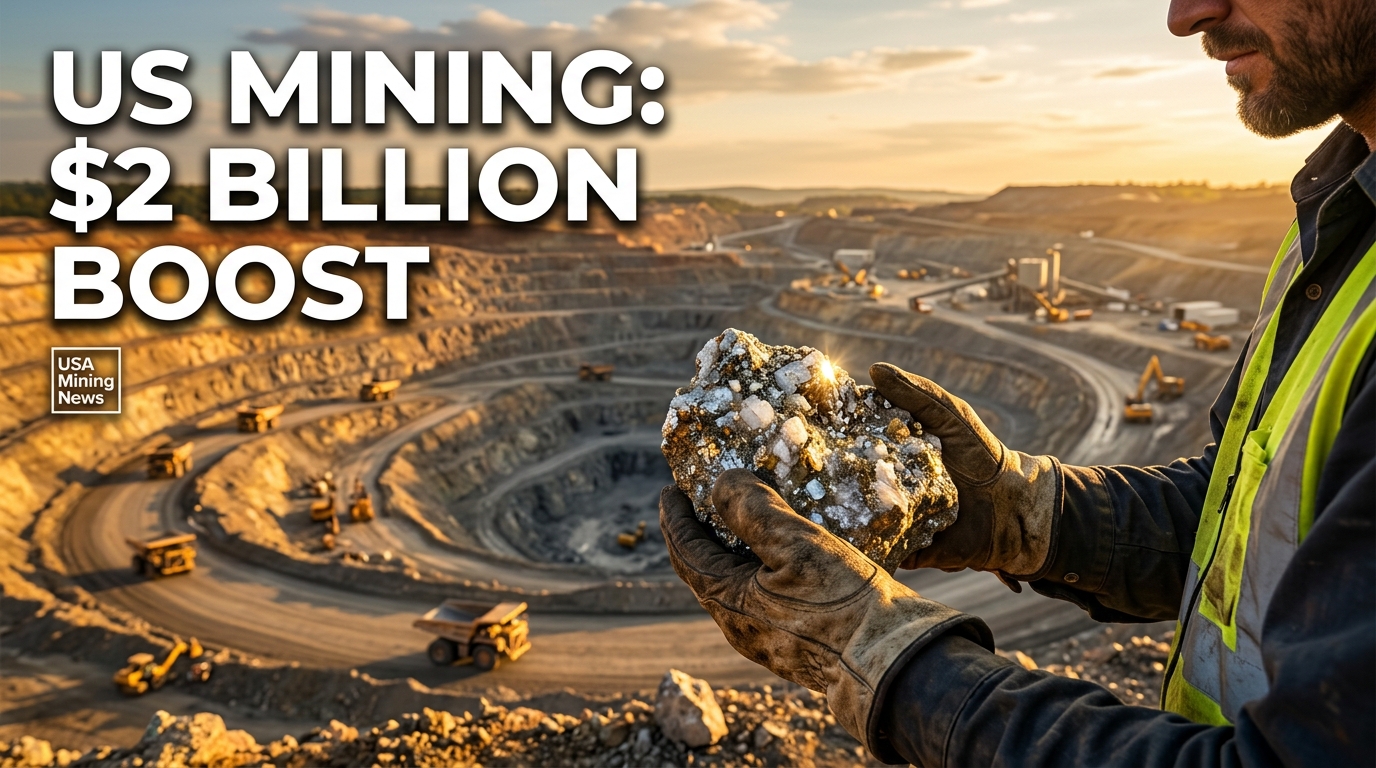
Washington D.C. – In a decisive move to re-shore critical minerals production and strengthen national supply chains, the US government, under the leadership of President Donald Trump, announced on August 10, 2026, a substantial investment exceeding $2 billion for new domestic mining and manufacturing projects. This landmark declaration, made during an industry roundtable hosted by the President, is complemented by over $180 million dedicated to revitalizing the nation's mining-related workforce and educational infrastructure. The comprehensive package underscores a strategic pivot towards enhancing America’s self-sufficiency in materials vital for defense, advanced technology, and economic stability.
The announcement follows a series of executive orders and policy measures initiated since January 2025, all centered on bolstering American minerals production, safeguarding supply chain security, and stimulating domestic manufacturing output. The White House has consistently framed these actions as crucial for both boosting economic competitiveness and fortifying national security in an increasingly complex global landscape. The recent funding allocation represents a tangible escalation of these efforts, translating policy aspirations into concrete financial commitments across diverse segments of the critical minerals value chain.
A Multi-Billion-Dollar Commitment to Domestic Critical Minerals
The core of the initiative is the allocation of over $2 billion towards a range of projects aimed at developing and processing critical minerals within the United States. These investments span from the extraction of foundational industrial minerals to the manufacturing of advanced materials essential for next-generation technologies. The Department of War, a key proponent of this strategic independence, confirmed several significant investments directed at shoring up critical defense and industrial supply lines.
The funding is meticulously distributed to address specific vulnerabilities and promote strategic capabilities:
- Standard Bauxite: Over $85 million has been earmarked for Standard Bauxite to support and expand its supply of refractory-grade bauxite. Refractory materials, which are capable of withstanding extremely high temperatures, are indispensable for industries such as steelmaking, cement production, and glass manufacturing. Securing a domestic source of high-quality bauxite, traditionally subject to global market volatility, is a foundational step in de-risking a wide array of industrial processes.
- Niron Magnetics (Minnesota): This Minnesota-based firm will receive a significant $150 million to advance the development of rare earth-free permanent magnets. Permanent magnets are crucial components in countless applications, including electric vehicle motors, wind turbines, and advanced defense systems. Given the current geopolitical sensitivities surrounding rare earth element supply chains, largely dominated by foreign entities, investment in viable alternatives like those being developed by Niron Magnetics holds profound strategic importance for both economic and national security.
- Sila Nanotechnologies (California): A substantial $1.4 billion has been allocated to Sila Nanotechnologies in California. This considerable investment is aimed at expanding the company's manufacturing capacity for silicon-carbon battery anodes and complete lithium-ion battery cells. This funding package represents one of the largest single investments in the domestic battery supply chain, critical for the rapidly expanding electric vehicle (EV) market, consumer electronics, and grid-scale energy storage solutions. Enhancing US capacity for advanced battery components is vital to reduce reliance on overseas manufacturing and establish a robust domestic ecosystem for energy storage.
- Sunrise Energy Metals: A further $400 million is being directed towards Sunrise Energy Metals to facilitate the establishment of a comprehensive scandium value chain. Scandium, a relatively rare but highly sought-after critical metal, is primarily used to create high-strength, lightweight aluminum alloys with applications in the aerospace, automotive, and sporting goods industries. Developing a domestic scandium supply chain would provide US manufacturers with a reliable source of this strategic metal, fostering innovation and reducing dependence on often opaque global markets.
EXIM Bank Fortifies Critical Mineral Production
Beyond direct government agency allocations, the Export-Import Bank of the US (EXIM) is playing a crucial role through targeted financing. EXIM has committed significant funds to bolster specific critical mineral production projects, further underscoring the coordinated federal approach:
- 5E Advanced Materials (California): EXIM has allocated $8 million to 5E Advanced Materials to support boron deposit production in California. Boron is a versatile critical mineral with applications ranging from advanced ceramics and specialty glass to detergents, agriculture, and high-performance alloys used in defense.
- Westwater Resources (Alabama): A $25 million allocation will support Westwater Resources in Alabama for graphite extraction. Graphite is a cornerstone material for lithium-ion battery anodes, making its domestic production essential for the burgeoning electric vehicle and renewable energy sectors.
- Global Advanced Materials (Pennsylvania): Another $25 million has been directed to Global Advanced Materials in Pennsylvania for tantalum and niobium development. Tantalum and niobium are strategic metals with critical applications in high-performance electronics, aerospace components, medical implants, and superalloys, vital for both commercial and defense technologies.
EXIM Chairman John Jovanovic articulated the strategic imperative behind these investments, stating, “Under President Trump’s leadership, America is leading the way in critical minerals development and rare earths processing. Critical mineral security is national security. These deals are a large part of EXIM’s strategy to fortify our supply chains, restore crucial industries that support well-paying American jobs, and safeguard everyday Americans from supply shocks.” His comments highlight the dual objectives of economic revitalization and strategic independence driving the administration's mineral security agenda.
Strengthening the Mining Workforce and Educational Infrastructure
Recognizing that mineral security is not solely about resource deposits and processing facilities, the administration has also made significant commitments to human capital development. The long-standing contraction in the US mining workforce has been a persistent challenge, threatening the viability of domestic operations and the transfer of critical institutional knowledge. The new funding directly addresses this issue:
- Department of Energy (DOE): The DOE has allocated $100 million to 14 mining schools across the nation. This substantial funding aims to double the capacity for mining and minerals-related qualifications, ensuring a pipeline of skilled professionals for the industry. This investment will support curriculum development, faculty recruitment, student scholarships, and advanced research facilities, fostering a new generation of mining engineers, geologists, metallurgists, and mineral economists.
- Department of War: Furthering the focus on defense and industrial needs, the Department of War will provide over $80 million to three select schools. This funding is specifically targeted at supporting workforce development and technological innovation initiatives directly relevant to strategic minerals and defense applications. The program aims to cultivate specialized expertise and accelerate the adoption of cutting-edge technologies within the critical minerals sector.
These workforce initiatives are designed to close the skills gap, attract new talent to the mining sector, and ensure that the US has the human expertise necessary to leverage its mineral resources effectively and competitively in the 21st century.
Implications for the Mining Industry and Future Outlook
This multi-billion-dollar federal push marks a pivotal moment for the US mining industry. For years, the sector has navigated a complex landscape of fluctuating commodity prices, stringent regulatory frameworks, and intense global competition. This level of direct government intervention signals a profound shift in strategic priorities, recognizing mining as a fundamental pillar of national security and economic resilience.
The implications for mining professionals and investors are far-reaching. The allocated funds are expected to:
- De-risk Domestic Projects: Government backing significantly reduces financial risk for companies engaged in critical minerals exploration, extraction, and processing, potentially attracting further private investment.
- Stimulate Innovation: Funding for advanced materials like rare earth-free magnets and silicon-carbon anodes will accelerate technological breakthroughs and foster a high-tech manufacturing base.
- Create High-Paying Jobs: Investments in both operational capacity and workforce development are poised to generate numerous skilled jobs across the value chain, from engineering to manufacturing.
- Strengthen Supply Chain Resilience: By establishing robust domestic sources, the US aims to insulate itself from geopolitical disruptions and market manipulations that have historically plagued critical mineral supplies.
However, challenges remain. Permitting processes, environmental regulations, and the sheer scale of investment required to compete with established global players will continue to demand strategic navigation. The success of these initiatives will also depend on sustained political will and efficient deployment of funds to ensure tangible outputs.
Looking ahead, this comprehensive package positions the United States to re-emerge as a formidable player in the global critical minerals arena. The investments announced on August 10, 2026, are not merely financial infusions; they represent a strategic declaration of intent to secure America’s industrial future, protect its national interests, and foster an environment where innovation and domestic production can thrive. The mining sector, from junior explorers to major producers, will undoubtedly be watching closely as these ambitious plans unfold, eager to contribute to and benefit from this new era of domestic resource revitalization.