In a pivotal development for the global critical minerals landscape, Viridis Mining and Minerals announced on September 7, 2026, the award of its first major equipment contract for the Colossus Rare Earth Project. Located in the resource-rich state of Minas Gerais, Brazil, the project is rapidly transitioning from its development phase into active execution, with a steadfast target of achieving initial rare earth production by 2028. This move signifies a crucial step for Viridis as it endeavors to establish itself as a significant Western producer of both light and high-value heavy rare earth elements, vital for myriad modern technologies and strategic industries.
Viridis Awards Critical Filtration Contract for Colossus Project
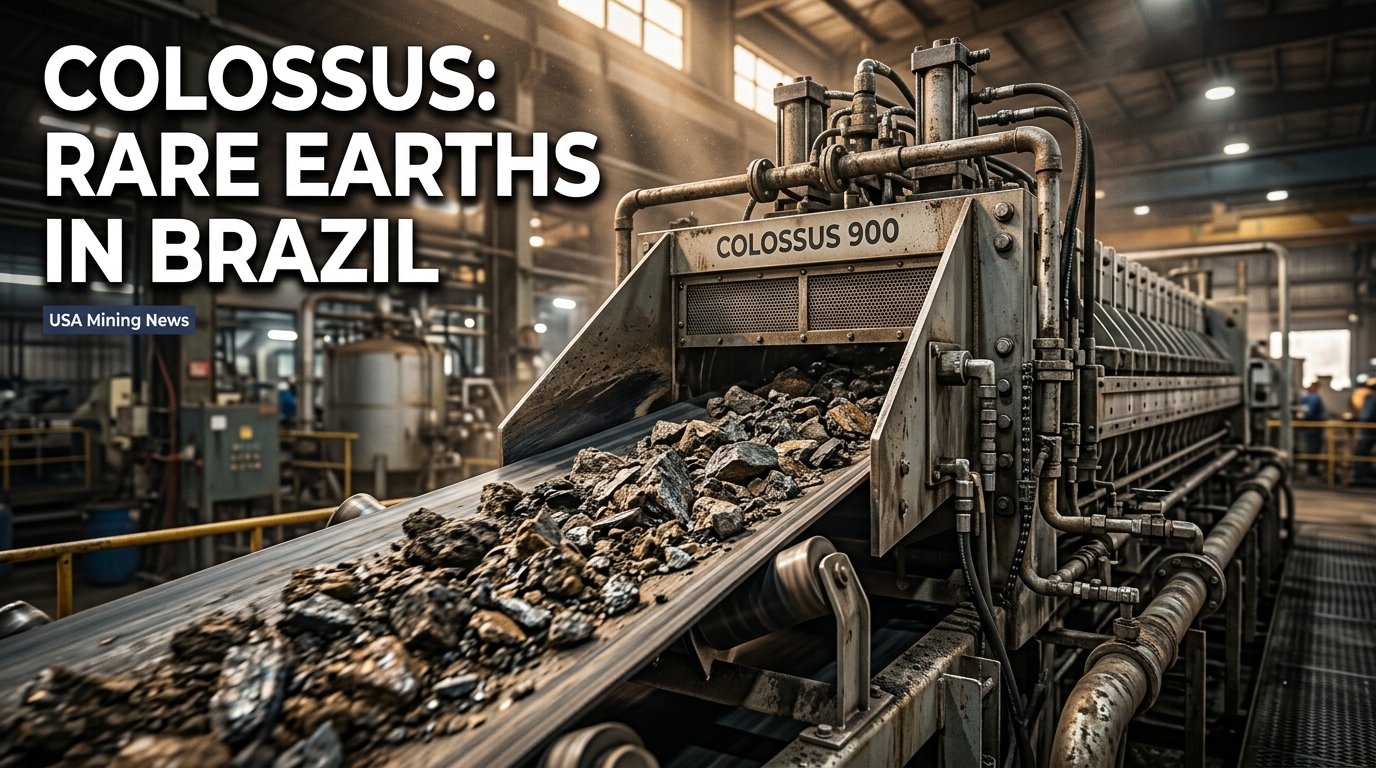
The contract, awarded to Dewater Filter Press, encompasses the design, manufacture, fabrication, testing, and supply of a sophisticated residue pressure filtration package. This essential system is designed to manage the solid-liquid separation of processed clay, enabling its efficient return to the mine site as part of comprehensive rehabilitation activities. The selection of Dewater Filter Press followed an intensive 12-month competitive tender process and a rigorous technical evaluation, underscoring Viridis's commitment to robust due diligence and optimal operational efficiency.
A key aspect of Dewater's selection involved dedicated testing utilizing actual Colossus residue samples. These crucial tests were instrumental in establishing the appropriate equipment sizing and fine-tuning operating parameters, ensuring the filtration system is perfectly calibrated for the project's specific geological and processing requirements. Furthermore, these tests underpinned contractual performance guarantees, meticulously setting benchmarks for throughput rates and final residue moisture levels. For a large-scale processing facility like Colossus, designed for a planned capacity of five million tonnes per annum, an efficient and reliable filtration system is not merely an operational component but a critical environmental and cost-saving imperative. The filtration system is recognized as a long-lead procurement component, meaning its early commitment is vital for maintaining the project's overall construction and commissioning timeline, with equipment manufacture alone expected to take approximately 12 months.
Colossus: A Strategic Rare Earth Endeavor in Brazil
The Colossus Rare Earth Project is strategically positioned within a combined area of 228.62 square kilometers, situated in and around the renowned Poços De Caldas Alkaline Complex in Minas Gerais, Brazil. This region is increasingly gaining prominence for its significant rare earth potential, offering a diversified source of these critical minerals outside traditional supply chains.
Rare earth elements (REEs) are indispensable for numerous high-tech applications, including electric vehicle motors, wind turbines, defense systems, and advanced electronics. The global mining industry and national governments, particularly in Western nations, are intensely focused on securing diversified and sustainable supplies of REEs to reduce geopolitical supply chain risks. Colossus, with its stated goal of producing both light rare earth elements (LREEs) and the more valuable heavy rare earth elements (HREEs), positions Brazil as a potentially significant contributor to this strategic objective. The project's targeted first production in 2028 aligns with a broader international push to de-risk critical mineral supply chains by the end of the decade.
Project Execution Gains Momentum
The awarding of this major equipment contract is a tangible indicator of Viridis's accelerated transition into the execution phase for Colossus. This follows several other significant milestones that have de-risked and advanced the project considerably. Notably, Viridis recently completed a Definitive Feasibility Study (DFS), a comprehensive engineering and economic assessment that solidifies the project's viability and technical parameters. Furthermore, the company previously secured a critical 138kV grid connection contract, addressing a fundamental infrastructure requirement for powering the future processing facility.
Viridis Managing Director Rafael Moreno articulated the significance of these developments, stating, "The placement of our first major process equipment order for Colossus is another important step as we move from development into execution. Following completion of the DFS and with our equity funding requirement now addressed, our focus is firmly on maintaining momentum through the commencement of EPCM [engineering, procurement and construction management] and progressive commitment of critical-path packages required to protect our targeted 2028 production schedule and position Viridis as the next major Western producer of both light and high-value heavy rare earth." Moreno's statement underscores a strategic, phased approach to project development, where each major contract and financing milestone is carefully orchestrated to minimize risk and maintain strict adherence to the overall timeline.
Strategic Financial Structuring and Funding
Recognizing the substantial capital expenditure inherent in large-scale mining projects, Viridis has implemented a prudent financial strategy for the Dewater contract. The order is structured with staged payment milestones, providing a level of financial flexibility and risk management during the initial phases. Crucially, it includes a contractual hold point, which provides an off-ramp or re-evaluation opportunity before a final investment decision (FID) is formally made on the overall Colossus project. This approach allows Viridis to limit its financial exposure while still progressing critical long-lead items, a common and effective strategy in large project development.
An additional and highly significant announcement from Viridis is the successful securing of sufficient equity funding sources to cover the required equity portion of its planned project financing. Securing equity is often one of the most challenging hurdles for mining ventures, particularly in the current global economic climate. By addressing this requirement, Viridis substantially de-risks the Colossus project, making it a far more attractive proposition for debt providers and other potential financiers. This foundational funding achievement provides a robust platform for the company to secure the remaining project financing necessary for full construction and commissioning, further solidifying the pathway to the 2028 production target.
The Broader Significance for Western Rare Earth Supply
The Colossus project holds profound implications for the global rare earth market and the strategic objectives of Western nations. Currently, a significant portion of the world's rare earth processing capacity is concentrated in a single geographical region, creating vulnerabilities in global supply chains. The drive to diversify these sources has become a geopolitical imperative, with countries like the United States and member states of the European Union actively seeking to foster new production capabilities. Viridis's ambition to become a "major Western producer" directly addresses this need, offering a potentially secure and ethically sourced supply from Brazil.
The dual focus on both light and heavy rare earth elements is particularly noteworthy. While LREEs are more abundant, HREEs, such as dysprosium and terbium, are less common but absolutely essential for high-performance magnets used in advanced defense systems and high-efficiency electric motors. A consistent and reliable supply of these critical HREEs is especially challenging to secure, making Colossus's potential output of these materials exceptionally valuable to industrial consumers and governments alike.
Future Outlook and Next Steps
With the award of this filtration package contract and the preceding grid connection agreement, coupled with the completion of the DFS and secured equity funding, Viridis has laid a solid foundation for the Colossus project. The immediate focus for the company will be the commencement of Engineering, Procurement, and Construction Management (EPCM) activities, which will involve detailed engineering, equipment sourcing, and construction oversight for the entire project. Further commitment of critical-path packages will follow, ensuring all necessary components and services are secured to maintain the aggressive 2028 production schedule.
For industry observers and potential investors, the next critical milestone will be the formal Final Investment Decision (FID) for the Colossus project, which will signal the full commitment to construction. Monitoring the progress of the equipment manufacturing, subsequent deliveries, and the overall construction timeline will be key indicators of the project's trajectory. If successful, Colossus has the potential to significantly alter the rare earth supply chain dynamics, providing a new, substantial source of these critical minerals and contributing to the global energy transition and technological advancement.