American Pacific Mining Targets Undrilled Depths at Madison Copper-Gold Project in Montana
Butte, Montana – June 3, 2026 – In a significant move set to potentially redefine the understanding of its Madison copper-gold project in Montana, American Pacific Mining has commenced drill testing of a newly identified, substantial geophysical anomaly. This program, part of the company’s broader 2026 exploration strategy, marks a pivotal moment as it targets an extensive, undrilled area within the project, promising to unlock new insights into the deep-seated mineralisation potential of this historically prospective region.
The Madison project, an integral part of American Pacific Mining’s portfolio, is located in a well-established mining district known for its copper and gold occurrences. The current exploration push follows a series of advanced geophysical surveys, specifically a magnetotelluric (MT) inversion survey conducted in March 2026, which has yielded highly detailed data surpassing previous exploration efforts on the property.
Unveiling a Buried Anomaly: The MT Survey at Madison
Geophysical surveys are critical tools in modern mineral exploration, allowing companies to "see" beneath the surface and identify potential mineralisation zones without extensive drilling. The magnetotelluric (MT) method, in particular, measures natural variations in the Earth’s electric and magnetic fields to map subsurface resistivity and conductivity. Highly conductive zones can often indicate the presence of sulphide minerals, graphitic structures, or hydrothermal alteration zones commonly associated with various types of ore deposits, including those found in skarn and intrusive-related systems.
American Pacific Mining’s recent MT inversion modelling at Madison has successfully identified two primary conductive zones. The central focus of the current drilling campaign is a substantial conductor that exhibits a distinct north-north-west to south-south-east trend. This orientation is particularly intriguing as it appears to align with the regional structural layout of the district and is situated in close proximity to significant fault corridors. Such structures are often crucial in controlling the movement of mineralising fluids, acting as conduits for the deposition of economic minerals.
The geometry of this primary anomaly is impressive, spanning approximately 2 kilometers (km) in length and 600 meters (m) in width. Current drilling plans are designed to test this anomaly to a depth of roughly 800 m. What makes this target exceptionally prospective is its location: within a section of the Madison project that has not previously been subjected to drilling. This represents a genuine step-out exploration opportunity into historically unexplored ground.
Geophysical Interpretation and Exploration Rationale
Detailed analysis of the MT inversion data has revealed a highly conductive core within the anomaly, suggesting the presence of significant alteration or mineralisation. The data also indicate potential connectivity between deeper and shallower conductive zones, which could be indicative of extensive alteration, carbonate replacement, or skarn-related mineralisation. The spatial association of the anomaly with the Silver Star fault corridor and its associated splays further strengthens the hypothesis that this structure played a crucial role in forming these conductive features.
The company notes that the main conductor could be the result of a combination of structural development, intense hydrothermal alteration, and potentially the presence of sulphide-rich mineralisation. Sulphide minerals, such as chalcopyrite (copper sulphide) and pyrite, are excellent electrical conductors and form the primary target in many base and precious metal deposits. However, American Pacific Mining remains judicious in its approach, emphasizing that "geophysical anomalies alone do not confirm the existence of mineralisation." This cautious stance is standard industry practice, understanding that drilling is the ultimate test of any geophysical target.
Despite this necessary caveat, the compelling characteristics of the anomaly – its considerable dimensions, distinctive shape, robust conductivity strength, and favorable structural context – have collectively positioned it as a leading drill target for the 2026 exploration program. Eric Saderholm, American Pacific Mining’s Exploration Managing Director, expressed considerable optimism regarding the new data, stating, "We have now received the final inversions of the MT survey conducted at Madison in March of this year. The resolution and clarity of the newly acquired MT data far surpass any historical geophysical techniques that have been used to understand the project, to date." This statement underscores the leap forward in geological understanding that modern geophysical methods provide.
The Broader 2026 Exploration Strategy
The initial drill hole into this new area is anticipated to yield invaluable geological data. This data will be critical in characterizing the subsurface lithology, understanding the pervasive alteration patterns, mapping structural features, quantifying sulphide levels, and, most importantly, establishing a definitive association between the conductor and any potential mineralisation. Such information will guide subsequent drilling and refine the exploration model for this previously undrilled sector of the project.
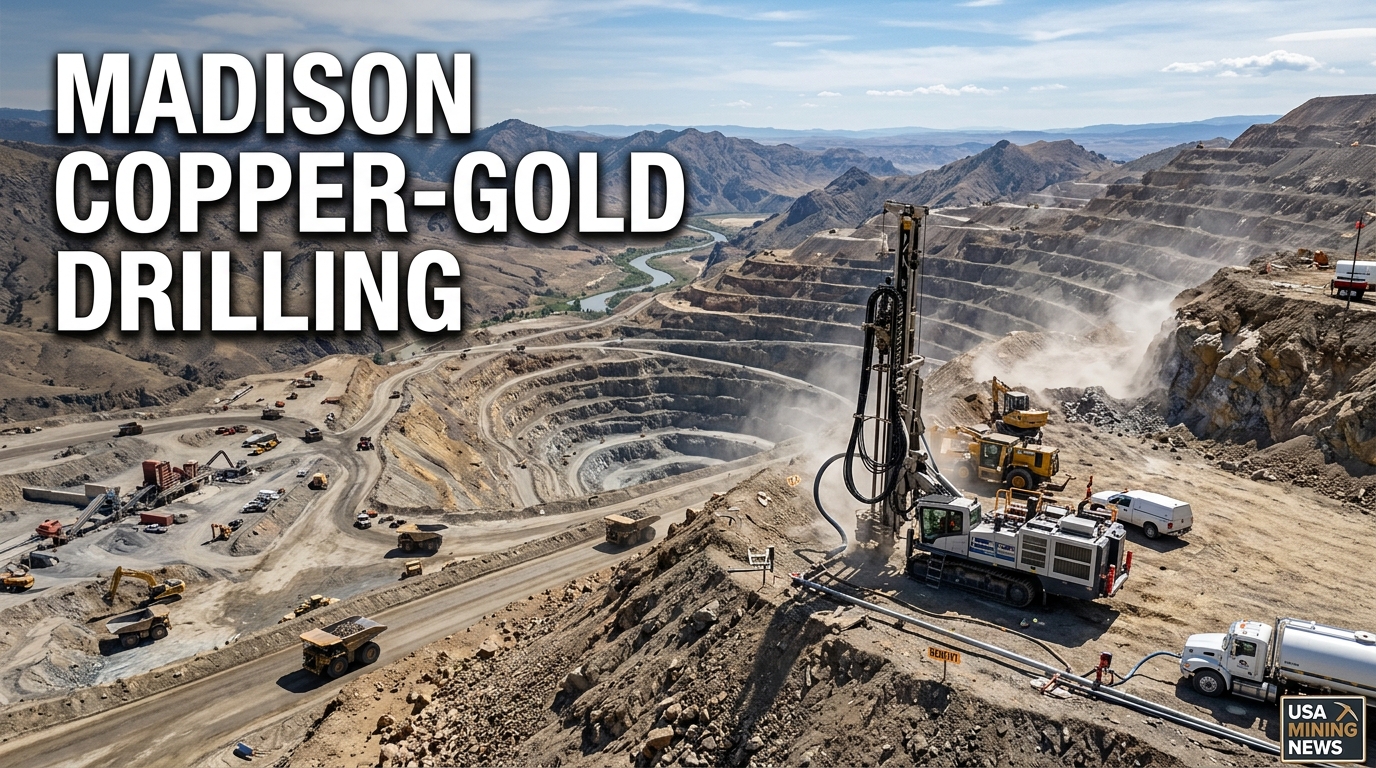
This targeted drilling is part of a much larger and ambitious 15,000-meter drilling program that American Pacific Mining commenced mobilization for in 2026. Currently, the first of two planned drills is on-site at Madison, actively executing the exploration objectives. Beyond testing the new MT anomaly, the comprehensive exploration plans for this year also include ongoing investigative work on known skarn mineralisation and deeper intrusive-related targets throughout the Madison project area. This dual approach of testing new, high-potential targets while also expanding on established zones reflects a robust and systematic exploration strategy.
Strategic Context: Why Madison Matters in the Copper-Gold Landscape
The exploration efforts at Madison come at a time of heightened global demand for critical minerals, particularly copper and gold. Copper is indispensable for the burgeoning clean energy transition, from electric vehicles and charging infrastructure to renewable energy systems and grid modernization. Gold continues to serve as a vital store of value and a critical component in various high-tech applications.
For the United States, new discoveries within its borders, especially for base metals like copper, align with broader national strategies to bolster domestic supply chains and reduce reliance on foreign sources. Projects like Madison, with their prospectivity for significant copper-gold deposits, contribute directly to the economic vitality of mining regions and offer the potential for long-term domestic resource security.
The Madison project's geology, characterized by skarn and intrusive-related mineralisation, is highly sought after by explorers. These deposit types are renowned for their potential to host large-tonnage, often high-grade multi-element deposits. The application of advanced geophysical techniques like MT in such settings is a game-changer, improving targeting efficiency significantly and de-risking the initial phases of exploration by providing clearer, deeper insights into subsurface geology than ever before. This methodical approach increases the probability of discovering economically viable deposits, thereby attracting further investment and accelerating project development.
Looking Ahead: Potential Impact and Next Steps
The immediate next step for American Pacific Mining will involve the careful logging and analysis of core samples from the first drill hole targeting the new MT anomaly. Geochemical assays will follow, providing quantitative data on metal concentrations. These results, combined with the detailed geological mapping, will be crucial in determining the significance of the anomaly and guiding the subsequent phases of the 15,000-meter drill program.
A successful intersection of significant mineralisation in this previously undrilled area could have profound implications for the Madison project. It would not only expand the known mineralized footprint but could also significantly enhance the project's overall resource potential and economic viability. Such a discovery would likely attract increased investor interest, potentially elevating American Pacific Mining's profile as a formidable explorer in the North American mining space.
The exploration at Madison exemplifies the ongoing commitment by companies like American Pacific Mining to leverage cutting-edge technology to uncover new mineral wealth in established districts. As the mining industry continues to grapple with increasing demand for metals and the complexities of exploration in mature jurisdictions, strategic, technologically-driven campaigns such as this one will be vital in ensuring a sustainable supply of essential commodities for the future.