August 21, 2026
Galantas Gold Secures Final Regulatory Clearance for Andacollo Project Restart in Chile
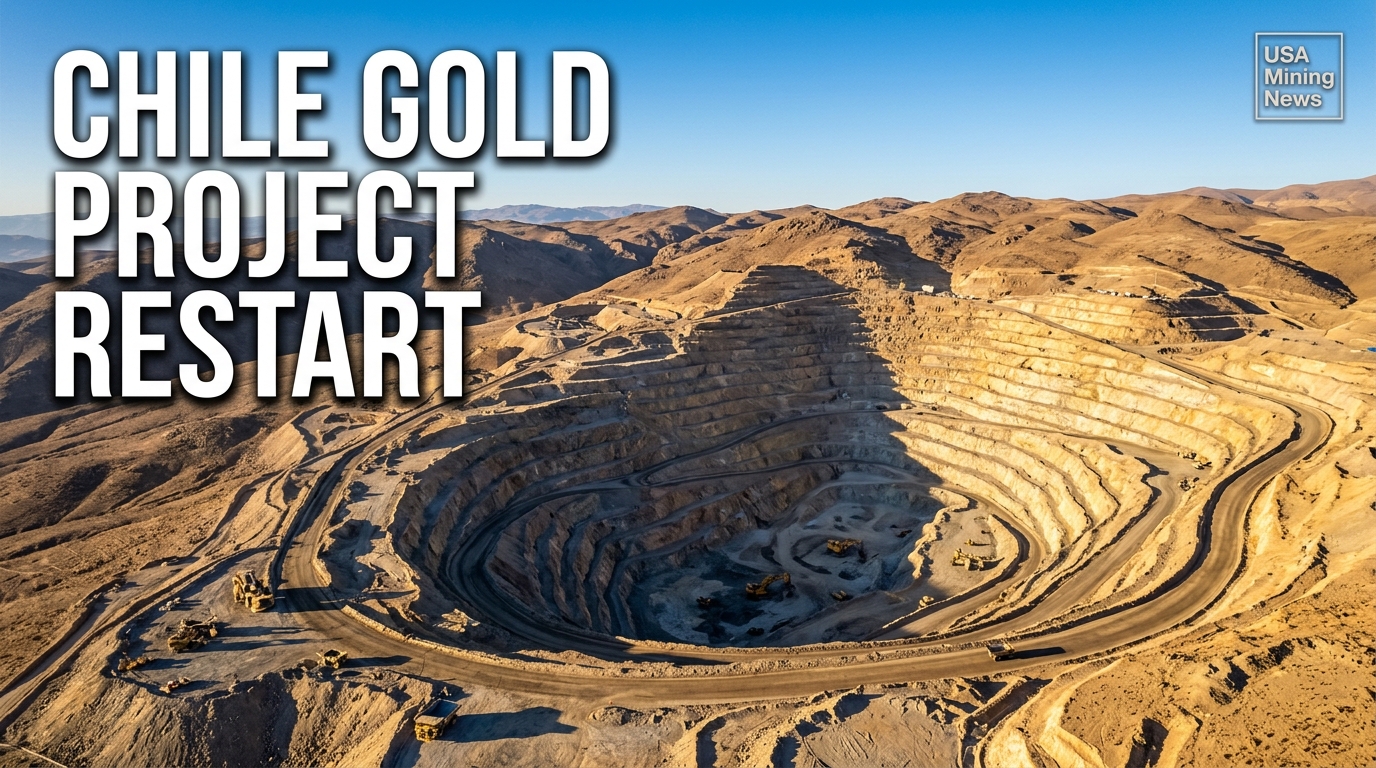
Galantas Gold has achieved a pivotal milestone in its strategy to reactivate the Andacollo Gold Project in central Chile, announcing the receipt of final regulatory approval from the nation’s primary mining authority. Chile’s National Geology and Mining Service, widely known as Sernageomin, has granted its consent for an amendment pertaining to the operational reactivation of the Ripios Dumps at the Andacollo Gold Project. This significant approval, secured in August 2026, marks the culmination of an intensive permitting process, allowing Galantas to proceed with its plans for recommencing operations at this historically productive gold mine.
The latest regulatory clearance specifically extends the original permit previously granted for the Ripios Dumps, explicitly authorizing the continuation of activities at the Dumps VII, VIII, and IX facilities. According to Galantas Gold, this consent represents the final key permitting requirement for resuming operations at Andacollo, building upon previous approvals that were announced earlier in August 2026. This comprehensive permitting journey underscores the rigorous environmental and operational scrutiny applied to mining projects within Chile, a nation renowned for its robust regulatory framework.
The Andacollo Project: A Significant Brownfield Opportunity
The Andacollo Gold Project represents a substantial brownfield opportunity for Galantas Gold, acquired by the company in June 2026 following the signing of an agreement in January of the same year. This strategic acquisition positioned Galantas to capitalize on an asset with established infrastructure and a proven track record of gold production. The project is strategically located in central Chile’s Coquimbo Region, situated at an approximate altitude of 1,000 meters above sea level. Its geographical advantage is further highlighted by its proximity, lying roughly 55 kilometers south-east of the bustling city of La Serena and immediately adjacent to the town of Andacollo.
Crucially, the Andacollo site shares its neighborhood with the Carmen de Andacollo copper mine, an active operation managed by Teck Resources. This adjacency not only indicates the rich mineralization of the district but also suggests a well-developed regional mining ecosystem, including access to skilled labor, supply chains, and established infrastructure. Such an environment is invaluable for the efficient and cost-effective restart of a mining operation.
Technical and Operational Details of the Restart
The Sernageomin decision confirms that the Ripios Dumps – specifically Dumps VII, VIII, and IX – will remain within their previously approved technical, operational, environmental, and safety limits. This validation is critical for ensuring the project’s compliance and responsible operation moving forward. Importantly, these specific waste dumps retain a substantial estimated 16.4 million tonnes of authorized capacity remaining, which accounts for an impressive 81% of their total approved capacity. This remaining capacity provides a robust foundation for future operations, especially considering that operations at the site were halted in 2016.
With all necessary regulatory clearances now in place, Galantas Gold possesses the authority to proceed under the existing mine design, waste disposal set-up, and heap-leach facilities operating conditions. This eliminates the need for entirely new designs or extensive re-engineering, which can be both time-consuming and capital-intensive. The authorization permits activity for a duration of four years from the start of mineral extraction or until the authorized tonnage or capacity is reached, providing a clear operational window and targets for the company.
Historically, the Andacollo Gold operation functioned as an open-pit, heap leach mine, a common and cost-effective method for extracting gold from lower-grade ores. This method involves stacking crushed ore on a pad and percolating a chemical solution through it to dissolve and recover the gold. The mine demonstrated significant productivity, processing an average daily rate of approximately 20,000 tonnes. Between 1995 and 2017, this operation was responsible for the production of a remarkable total of 1.12 million ounces of gold, firmly establishing Andacollo as a historically significant gold producer in Chile.
Market Implications and Industry Context
The restart of a historically productive gold mine like Andacollo holds substantial implications for both Galantas Gold and the broader gold mining industry. For Galantas, it represents a transformational opportunity to transition from primarily an exploration or development-stage company to a gold producer, significantly enhancing its asset portfolio and revenue potential. The acquisition of a brownfield site with existing infrastructure, substantial remaining permitted capacity, and a proven production history mitigates many of the risks associated with greenfield projects, offering a faster path to production.
From an industry perspective, the recommencement of operations at Andacollo contributes to the global gold supply at a time when demand for the precious metal remains robust, driven by economic uncertainties, inflation concerns, and its enduring role as a safe-haven asset. Projects with a clear path to production, especially those leveraging existing infrastructure, are increasingly valued by investors seeking to capitalize on strong commodity markets. The use of heap leach technology, while requiring careful environmental management, is a proven method for unlocking value from large, lower-grade deposits, aligning with current industry trends toward optimizing resource recovery.
Furthermore, Chile’s reputation as a top-tier mining jurisdiction, characterized by its vast mineral endowment and established regulatory framework, makes such project restarts particularly attractive. While navigating the Chilean permitting process can be complex, Sernageomin’s final approval signifies that Andacollo meets stringent national standards for operational safety, environmental protection, and technical feasibility. This regulatory endorsement provides a high level of assurance for investors and stakeholders.
Future Outlook and Community Engagement
With all regulatory hurdles cleared, Galantas Gold is now intensely focused on the preparatory phases for the project restart. The company is actively engaged in a multi-faceted approach encompassing engineering, procurement, and infrastructure work, alongside detailed operational planning. These activities are critical to ensure a smooth and efficient transition from the current dormant state to full operational capacity.
Beyond the technical aspects, Galantas Gold is also prioritizing its commitment to local stakeholders and sustainable development. The company’s efforts continue to focus on fostering local employment opportunities within the town of Andacollo, recognizing the significant economic impact a large-scale mining operation can have on a community. This includes engaging local contractors and prioritizing procurement from regional businesses, thereby ensuring that the economic benefits of the project are widely distributed within the immediate vicinity.
Galantas has explicitly stated its intention to work closely with local authorities and community stakeholders to ensure a responsible restart of operations. This proactive approach to community engagement and social license is increasingly vital in modern mining, where effective collaboration with local populations is paramount for long-term operational success and sustainability. By prioritizing these relationships, Galantas aims to build trust and ensure that the Andacollo Gold Project delivers mutual benefits for both the company and the region it operates within. The restart of Andacollo under these conditions represents not just a corporate achievement for Galantas Gold, but also a significant economic uplift for the Coquimbo Region and a reaffirmation of Chile’s role as a leading global mining destination.