Mining - September 3, 2026
How Autonomous Vehicle Fleets Are Reshaping Australia’s Mining Workforce
The Australian mining industry, a global leader in commodity production, is at the forefront of a significant technological revolution: the widespread adoption of autonomous vehicle fleets. As reported by Scarlett Evans on September 3, 2026, for Mining Technology, this transition is not merely an operational upgrade but a fundamental redefinition of the mining workforce itself. Across Australian mines, operators are actively engaged in redefining roles, retraining workers, and strategically preparing for an increasingly digital future, moving personnel from traditional vehicle cabs to sophisticated remote control rooms and other technology-focused positions.
The Inexorable Rise of Autonomy in Australian Mining Operations
The proliferation of autonomous systems, particularly autonomous haul trucks, marks a pivotal moment in the evolution of mining. For years, the industry has sought to enhance safety, improve efficiency, and optimize productivity. Autonomous technology offers a compelling solution to these perennial challenges. In the Australian context, where mines often operate in remote and challenging environments, the ability to conduct operations with minimal human presence at the immediate worksite presents numerous advantages. These include reduced exposure to dust, noise, and vibration for personnel, thereby significantly enhancing occupational health and safety standards. Furthermore, autonomous fleets can operate continuously, often 24 hours a day, 7 days a week, without breaks for shift changes or fatigue, leading to substantial gains in operational uptime and material movement efficiency.
The deployment of these advanced systems necessitates a significant capital investment, but the long-term benefits in terms of safety, operational consistency, and cost savings—driven by optimized fuel consumption and reduced wear and tear on equipment through precise, consistent operation—are proving to be a strong incentive for major mining operators across the continent. While the source specifically mentions "autonomous haul trucks," the broader trend of "autonomous systems" suggests an integration that could encompass autonomous drills, excavators, and even rail systems, all contributing to a highly integrated, data-driven mining ecosystem.
From Vehicle Cab to Remote Control Room: A Paradigm Shift
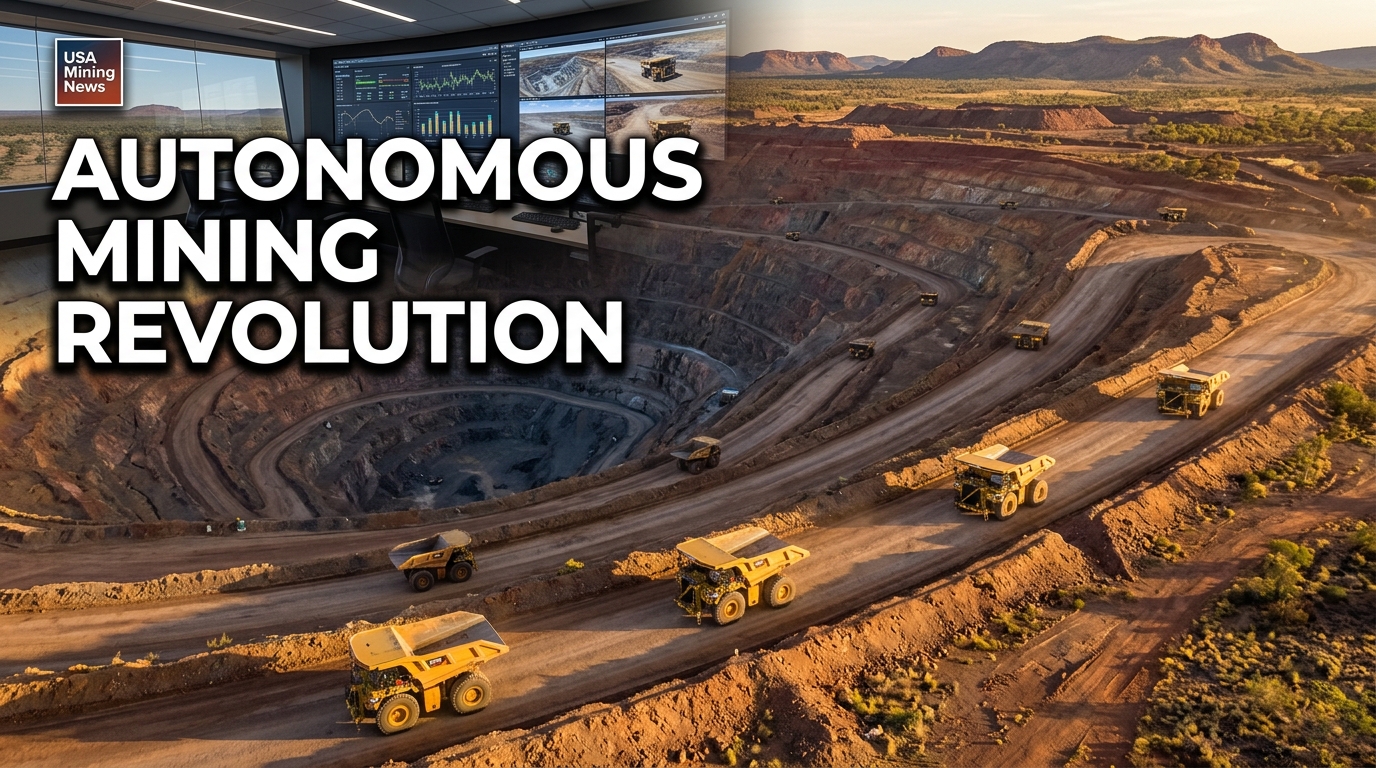
One of the most immediate and visible changes brought about by autonomous vehicle fleets is the relocation of personnel. The image credit, Parilov/Shutterstock.com, vividly illustrates this shift, depicting autonomous haul trucks as the vanguard of this transformation. Historically, a haul truck operator would spend long shifts in the cab, navigating challenging terrain, often in harsh weather conditions and isolated locations. With autonomy, these skilled individuals are transitioning away from direct in-cab operation to supervisory roles within advanced control rooms, often located hundreds or even thousands of kilometers away from the mine site itself.
These remote control rooms are sophisticated operational hubs equipped with multiple monitors displaying real-time data from autonomous fleets, live video feeds, and intricate mapping systems. Operators in these environments are no longer solely focused on steering and accelerating. Instead, their responsibilities encompass monitoring multiple vehicles simultaneously, ensuring optimal routing, managing traffic flow, troubleshooting minor anomalies, and coordinating with other autonomous and human-operated equipment. This transition fundamentally alters the work environment, moving from a physically demanding, isolated role to a cognitively intensive, collaborative, and technologically advanced position. It signifies a profound change in the very nature of what it means to be a "miner" in the 21st century.
Redefining Roles and Cultivating a Digital Workforce
The move to autonomous operations is driving a comprehensive redefinition of job roles within the Australian mining industry. The traditional hierarchy and skill sets are being augmented and, in some cases, replaced by a demand for new competencies. While the need for physical operators in vehicle cabs diminishes, new roles are emerging that require a blend of technical expertise, data literacy, and critical thinking. These roles extend beyond the direct supervision of autonomous fleets to encompass:
- Remote Fleet Supervisors/Controllers: Individuals overseeing the real-time operations of multiple autonomous vehicles, ensuring safety protocols are adhered to, and intervening when necessary.
- Data Analysts and Engineers: Specialists who interpret the vast streams of operational data generated by autonomous systems to identify efficiencies, predict maintenance needs, and optimize performance.
- Robotics and Automation Technicians: Skilled tradespeople responsible for the maintenance, repair, and calibration of complex autonomous machinery and sensor systems.
- Network and IT Specialists: Professionals who ensure the robust, secure, and high-bandwidth connectivity vital for remote operations.
- Software Developers: Engineers who contribute to the ongoing refinement and customization of the autonomous operating systems and associated platforms.
This necessitates that mining operators invest heavily in developing a "more digital workforce." The focus is shifting from manual dexterity and equipment familiarity to analytical skills, proficiency with digital interfaces, and an understanding of complex algorithms and networked systems. The future mining professional will increasingly be a technologist as much as a traditional miner.
Retraining and Upskilling Initiatives: Bridging the Skills Gap
Acknowledging this evolving skills landscape, mining companies and industry bodies in Australia are prioritizing comprehensive retraining and upskilling programs. These initiatives are crucial for ensuring that existing workers are not displaced but rather transitioned into the new, technology-focused roles. Such programs typically involve:
- Digital Literacy Training: Equipping employees with fundamental computer skills, data interpretation, and proficiency with new software platforms.
- Specialized Technical Courses: Offering training in areas such as remote equipment operation, diagnostic software, robotics maintenance, and network management.
- Cross-Functional Development: Encouraging a broader understanding of integrated mining systems, moving beyond single-task specialization.
- Partnerships with Educational Institutions: Collaborating with universities and vocational schools to develop curricula tailored to the needs of an autonomous mining environment.
The goal is to provide pathways for current employees to acquire the necessary competencies for these emerging roles, thereby retaining valuable institutional knowledge and fostering a sense of continuity during this period of significant change. This proactive approach to workforce development is critical for maintaining social license to operate and ensuring a stable, skilled labor pool for the future.
Market and Industry Context: Why This Matters
The transformation of Australia's mining workforce through autonomous systems holds significant implications for the broader industry, both domestically and globally. Australia, known for its extensive iron ore, coal, gold, and other mineral resources, is often seen as a bellwether for innovation in large-scale mining operations. The success and methodologies employed in its adoption of autonomy provide valuable blueprints for other mining regions around the world.
From an investor perspective, companies successfully integrating autonomous fleets often demonstrate enhanced operational resilience, reduced exposure to labor-related risks (such as strikes or shortages), and potentially lower operating costs over the long term. This can translate into more attractive investment profiles. For the commodity markets, greater efficiency and consistency in production enabled by autonomy could contribute to more stable supply chains, though the impact on overall production volumes is complex and depends on market demand and capital investment cycles.
Furthermore, the development of a highly skilled, digital mining workforce positions Australia as a leader in mining technology, potentially fostering an ecosystem of innovation that could export expertise and solutions globally. The commitment to retraining also underscores a recognition within the industry that human capital remains central to success, even as technology advances.
Future Outlook: A Continuously Evolving Landscape
As of September 3, 2026, the trend of autonomous systems spreading across Australian mines is well-established and shows no signs of abating. The future outlook points to a continuous evolution of both the technology and the workforce adapting to it. Next steps for the industry will likely involve:
- Further Integration and Optimization: Moving beyond individual autonomous units to fully integrated autonomous mine sites where all equipment, from drills to processing plants, communicates and operates synergistically.
- Advanced AI and Machine Learning: Leveraging more sophisticated artificial intelligence to predict operational issues, optimize energy consumption, and make real-time decisions that enhance efficiency.
- Enhanced Remote Capabilities: Pushing the boundaries of remote operation, potentially enabling control from even greater distances or with smaller, more specialized teams.
- Continued Workforce Development: Ongoing investment in education and training to ensure the workforce's skills evolve alongside technological advancements.
- Cybersecurity Focus: Strengthening defenses against cyber threats, which become increasingly critical as operations become more digitized and networked.
The potential impact of these developments is far-reaching. It promises safer, more efficient, and more sustainable mining operations. However, it also demands adaptability from both employers and employees. The Australian mining industry's proactive approach to workforce transformation sets a precedent for how a traditional heavy industry can embrace disruptive technology while strategically managing its human capital. The journey from a manual, in-cab operation to a digitally managed, remotely supervised enterprise is a testament to the industry's resilience and forward-thinking vision.