WASHINGTON D.C. – In a significant move set to reshape the global rare earth element (REE) supply landscape, Ionic Rare Earths (IonicRE) has officially partnered with Nth Cycle through a joint development and licensing agreement. Announced on May 21, 2026, this collaboration introduces a paradigm shift in REE refining, aiming to establish a robust, Western-centric production pathway that reduces reliance on established, often geographically concentrated, processing methods and critical reagents. The integration of Nth Cycle’s advanced electro-extraction technology into IonicRE’s operations holds the potential to substantially optimize the recycling and refining of these vital materials, critical for everything from defense applications to advanced manufacturing and the burgeoning electric vehicle sector.
A Strategic Partnership for Western REE Refining
The core of this transformative partnership lies in the deployment of Nth Cycle’s proprietary electro-extraction technology. This innovative process is designed to replace the conventional use of oxalic acid, a reagent heavily relied upon in traditional rare earth refining. In doing so, the collaboration directly addresses several pressing challenges currently facing the rare earth industry, including cost efficiencies, supply chain vulnerabilities, and environmental impact.
Nth Cycle’s electro-extraction method operates by utilizing electricity to convert recycled feedstocks directly into high-purity rare earth oxides (REOs). A key environmental and economic advantage of this process is its ability to regenerate hydrochloric acid (HCl) for continuous reuse, effectively creating a closed-loop system for a critical chemical input. This distinct approach contrasts sharply with conventional refining techniques, which often involve multiple solvent extraction stages, significant chemical consumption, and the generation of considerable waste byproducts. By minimizing fresh chemical inputs and maximizing regeneration, the electro-extraction technology offers a pathway to a more sustainable and economically competitive refining alternative.
Breaking China's Oxalic Acid Dependency
The urgency behind this partnership is underscored by the current geopolitical realities of the rare earth market. As of the latest available data, China refines an overwhelming 90% of the world’s rare earth materials. This dominance in processing creates a single point of failure within the global supply chain, leaving industries reliant on REEs vulnerable to potential disruptions, trade policies, or logistical challenges emanating from a single nation. Furthermore, this heavy reliance extends to the chemical inputs themselves, with oxalic acid being a notable example of a critical reagent whose supply chain is deeply intertwined with China's manufacturing base.
The IonicRE-Nth Cycle collaboration directly aims to mitigate this reliance on oxalic acid, serving as a crucial step towards fostering a more resilient and diversified supply chain for Western refineries. By developing an alternative, electrochemically driven refining path, the partnership directly supports the broader strategic imperative for Western nations to secure independent access to these critical minerals. This technological shift is projected to yield multiple benefits:
- Reduced Costs: By eliminating the need for large quantities of purchased oxalic acid and regenerating hydrochloric acid, operational expenditures (OpEx) are expected to decrease significantly. Lower input costs directly translate to improved financial viability for domestic refining operations.
- Minimized Supply Dependencies: Diversifying away from specific chemical reagents and processing routes that are currently concentrated in geopolitically sensitive regions enhances the overall security of the supply chain. This move lessens vulnerability to export restrictions, price volatility, or political leverage.
- Lower Carbon Footprint: The electro-extraction approach, with its reduced chemical consumption and potential for energy efficiency (especially when powered by renewable sources), offers a more environmentally benign refining solution. This aligns with global efforts to decarbonize industrial processes and promotes sustainable mining and metallurgy practices.
These advantages collectively position the joint process as a formidable and competitive alternative to existing refining methodologies, potentially redefining the economic and environmental benchmarks for rare earth processing.
Vertical Integration in the US: The Missouri Blueprint
The partnership with Nth Cycle is not an isolated initiative for IonicRE but rather integrates seamlessly into its broader strategy for establishing a vertically integrated rare earth production capability within the United States. A key component of this strategy is IonicRE’s recent memorandum of understanding (MoU) with US Strategic Metals in Missouri.
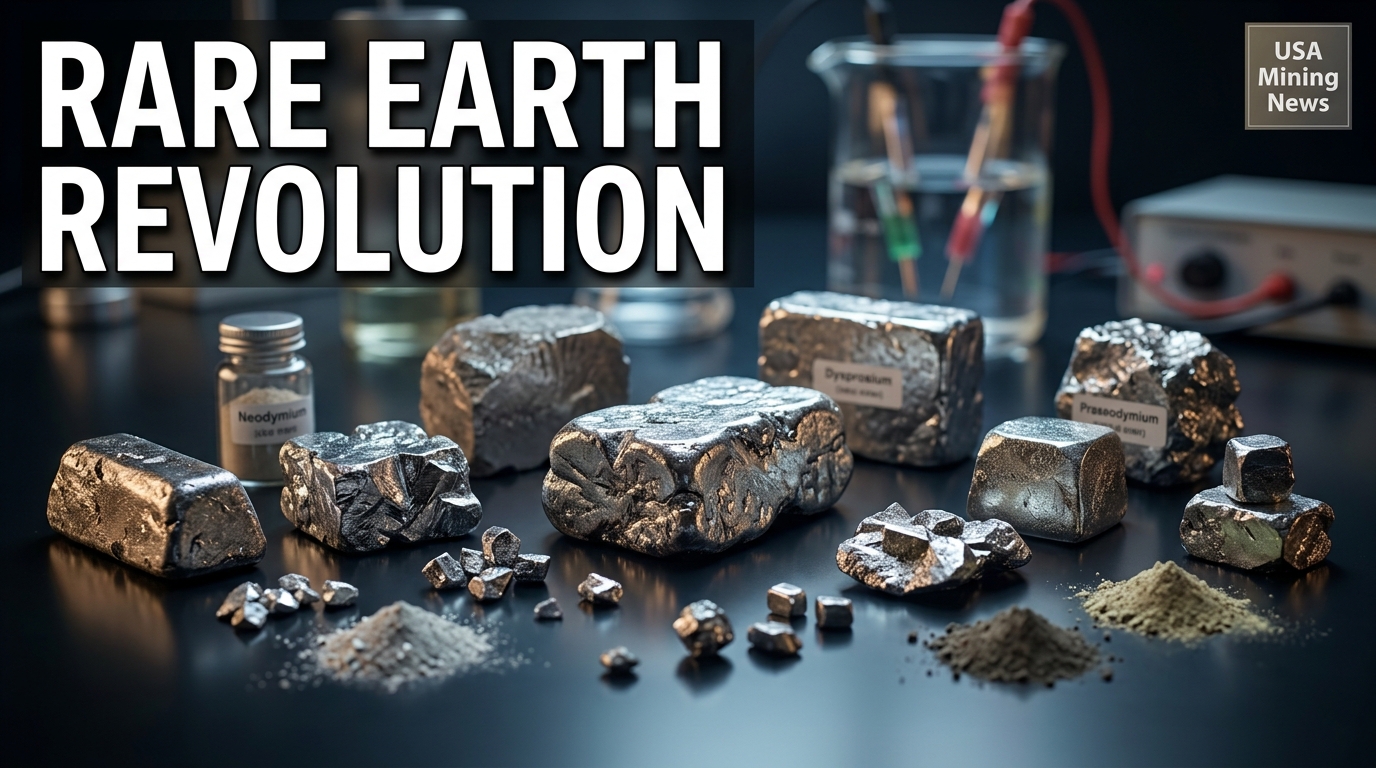
This Missouri-based initiative envisions the development of a state-of-the-art facility focused on vertically integrated rare earth production derived from recycling operations at US Strategic Metals’ existing site. The planned facility is specifically designed to produce vital rare earth elements in high-purity oxide forms, including:
- Neodymium (Nd)
- Praseodymium (Pr)
- Dysprosium (Dy)
- Other strategic heavy rare earths
These elements are particularly critical due to their indispensable role in high-strength permanent magnets, which are fundamental components in electric vehicle motors, wind turbines, and a wide array of defense technologies. The strategic importance of these specific REEs has been further amplified by recent Chinese export restrictions on certain rare earth processing technologies and materials, underscoring the urgent need for diversified supply sources.
Beyond the initial Missouri project, IonicRE and Nth Cycle are actively exploring additional recycling opportunities across the United States. This expansion strategy aims to further bolster domestic production capabilities, creating a network of facilities that can process various recycled feedstocks to extract valuable rare earths, thereby enhancing the overall resilience and self-sufficiency of the US critical minerals supply chain.
Aligning with US-Australia Critical Minerals Framework
The strategic timing and nature of the IonicRE-Nth Cycle partnership resonate strongly with broader geopolitical initiatives aimed at securing critical mineral supply chains for democratic allies. This initiative directly supports the US-Australia Framework for securing critical minerals, an agreement established in October 2025 by then-US President Donald Trump and Australian Prime Minister Anthony Albanese. This bilateral framework is a testament to the shared commitment of both nations to collaborate on projects that enhance the supply and processing of critical minerals, which are essential for their respective defense industries and advanced manufacturing sectors.
By fostering innovation in refining technology and expanding recycling capabilities, the IonicRE-Nth Cycle collaboration contributes directly to the objectives outlined in this framework. It represents a tangible step towards building resilient, ethical, and environmentally responsible supply chains that are crucial for national security and economic stability in both the United States and Australia, as well as for other allied nations.
Operational Benefits and Broader Implications
Tim Harrison, Managing Director and CEO of IonicRE, emphasized the significance of this collaboration, stating, IonicRE is excited to form this partnership with Nth Cycle, one that leverages exciting technology from electro-extraction for integration into IonicRE’s patented long-loop recycling technology, with the potential to significantly reduce both our OpEx and carbon footprint.
He further highlighted the dual applicability, noting, This can also translate directly to our refining process for primary mixed rare earth carbonate (MREC) separation and refining to high purity REOs.
Harrison's remarks underscore the versatility and strategic importance of Nth Cycle’s technology. The long-loop recycling technology
refers to the process of recovering rare earths from end-of-life products, such as spent magnets, which represent a rapidly growing source of secondary REE supply. Integrating electro-extraction into this process enhances its efficiency and sustainability. Moreover, the technology’s applicability extends beyond recycled materials to primary mixed rare earth carbonate (MREC) feeds, a common intermediary product from mining operations. This means the Nth Cycle process can be used for both urban mining (recycling) and traditional mining feedstocks, offering a universal solution for various stages of the rare earth value chain.
The ability to refine MREC into high-purity rare earth oxides (REOs) is particularly crucial. REOs are the immediate precursors for the production of rare earth metals and alloys, which are then used in magnet manufacturing and other high-tech applications. By streamlining and de-risking this critical refining step, the partnership helps to establish a more secure and efficient pathway from mined or recycled material to finished, high-value products.
The Road Ahead: Bolstering a Resilient REE Supply Chain
The partnership between IonicRE and Nth Cycle represents a significant stride towards de-risking the rare earth supply chain for Western nations. By focusing on technological innovation, reduced environmental impact, and diversified processing capabilities, this collaboration offers a blueprint for building a more resilient, cost-effective, and sustainable rare earth industry. The collective efforts to establish vertically integrated recycling facilities in the US, combined with the strategic alignment with international agreements like the US-Australia Critical Minerals Framework, signal a determined push towards wresting control of critical mineral processing from concentrated geographies.
As the global demand for rare earths continues to surge, driven by the acceleration of green energy transitions and advancements in high-tech industries, initiatives such as this will be paramount. The success of this partnership will not only provide a more secure supply of essential rare earths for American and allied industries but also serve as a powerful example of how technological ingenuity and strategic collaboration can overcome complex geopolitical and industrial challenges in the pursuit of a more sustainable and secure future.