Mining Enters the Age of Geopolitical Supply Chains: Refining and End-of-Life
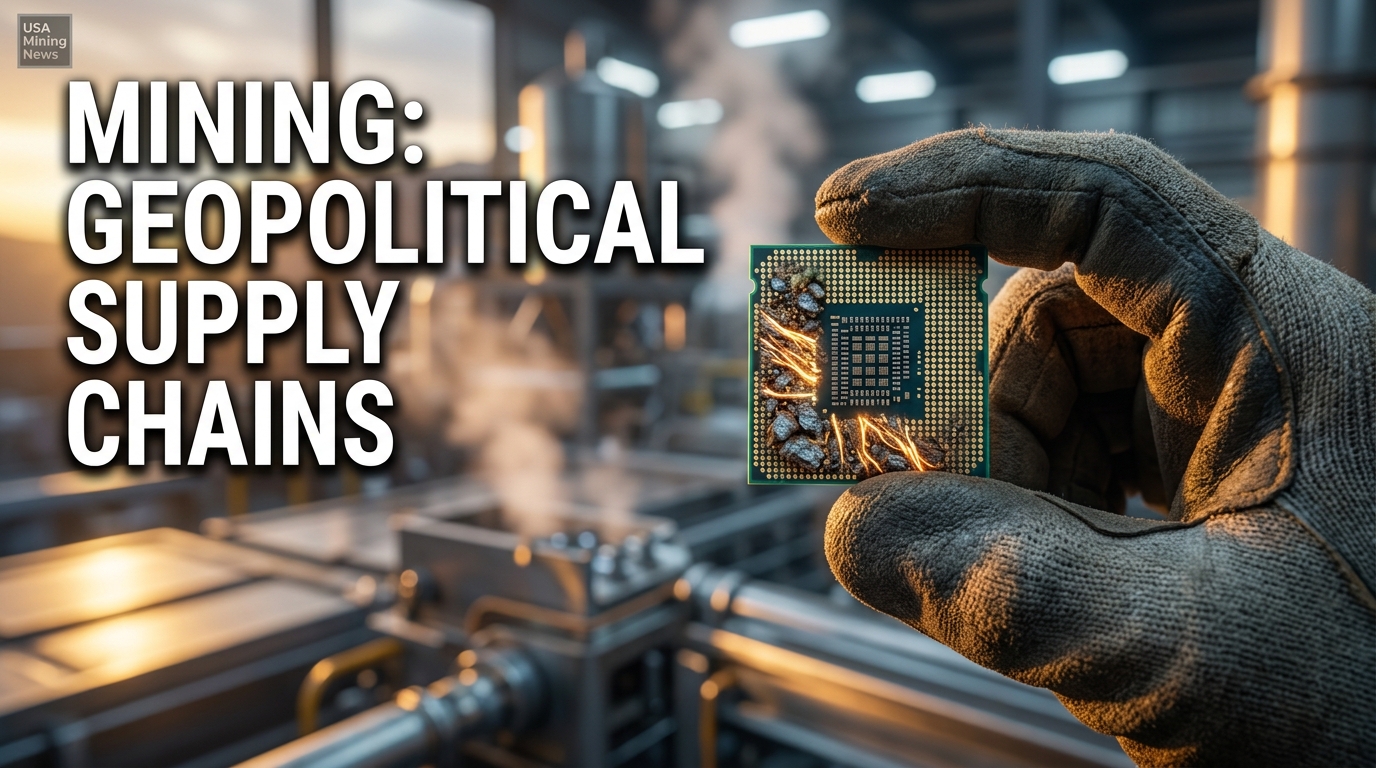
The global mining sector, long accustomed to the complex challenges of resource discovery and extraction, is now confronting an evolving strategic landscape where traditional upstream dominance is no longer the sole determinant of mineral security. As highlighted by analyst Alejandro Gonzalez on May 21, 2026, the new strategic battlegrounds of the critical minerals economy have definitively shifted to refining, recycling, and comprehensive supply chain control. This paradigm shift, underscored by intensifying geopolitical competition and the accelerating energy transition, demands a robust re-evaluation of national and corporate strategies across the entire mineral value chain.
For industry professionals and investors, understanding this transformation is paramount. The implications stretch from long-term capital allocation decisions to innovations in processing technology and the very structure of international trade agreements. The era of simply mining ore and exporting it for others to process is rapidly waning, replaced by an urgent imperative for nations and companies to secure and control every stage of the critical mineral journey.
The Shifting Sands of Critical Mineral Strategy
Historically, the mining industry’s primary focus—and the associated strategic competition—revolved around access to and control of geological endowments. Nations with rich deposits of essential metals held significant leverage. However, the modern critical minerals economy transcends mere resource availability. As the demand for materials like lithium, cobalt, nickel, rare earth elements, and copper escalates, driven by the global push towards electrification and decarbonization, vulnerabilities deeper within the supply chain have become glaringly apparent. These vulnerabilities are not in the ground, but in the highly specialized and often geographically concentrated facilities that transform raw ore into usable metals and chemicals.
Alejandro Gonzalez's observation in May 2026 accurately captures this evolving reality. The "geopolitical supply chains" now refer to an intricate web of extraction, processing, manufacturing, and recycling, all subject to national security concerns, economic ambitions, and strategic alliances. Governments worldwide are increasingly recognizing that securing critical minerals means securing the entire value chain, not just the initial mining phase. This holistic perspective is fundamentally altering investment priorities, trade policies, and geopolitical relationships, reshaping the mining landscape as we know it.
Refining: The Critical Choke Point
Refining, or downstream processing, stands out as perhaps the most significant strategic battleground. While many nations possess significant critical mineral reserves, the capacity and expertise to process these raw materials into high-purity metals or chemical compounds are often concentrated in a limited number of countries. This concentration creates a critical choke point, where a single geopolitical event or policy shift can disrupt global supply, severely impacting industries from electric vehicle manufacturing to renewable energy infrastructure.
The refining process itself is technically complex, capital-intensive, and often carries substantial environmental footprints. These characteristics have historically deterred investment in new refining capacity in many Western nations, leading to a reliance on existing dominant players. However, the current geopolitical climate necessitates a fundamental reconsideration of this approach. Nations are now actively seeking to diversify and onshore or "friend-shore" their refining capabilities. This involves not only significant financial investment but also the development of skilled labor forces, the implementation of advanced processing technologies, and stringent environmental compliance measures.
For mining companies, this means a potential shift from being purely upstream commodity producers to entities considering greater vertical integration or strategic partnerships with midstream processors. Investors, in turn, are increasingly scrutinizing the full value chain, recognizing that securing a mining asset is only half the battle; ensuring a secure and resilient pathway to market for its refined output is equally, if not more, critical.
End-of-Life (EoL) Recycling: A Pillar of Future Supply Security
Accompanying the renewed focus on refining is the burgeoning importance of End-of-Life (EoL) recycling. Often referred to as "urban mining," EoL recycling involves recovering critical minerals from discarded products, ranging from consumer electronics to electric vehicle batteries. This sector is rapidly gaining prominence as a vital component of supply chain security for several reasons:
- Reduced Primary Resource Dependence: Recycling lessens the reliance on new primary extraction, offering a supplementary and increasingly significant source of critical materials.
- Environmental Benefits: Recycling typically has a smaller environmental footprint compared to primary mining and processing, aligning with global sustainability goals.
- Geopolitical Mitigation: By creating domestic or regional circular economies, recycling can reduce exposure to volatile international supply chains and commodity price fluctuations.
- Economic Value Creation: New industries emerge around collection, dismantling, and reprocessing technologies, creating jobs and fostering innovation.
Despite its promise, EoL recycling presents its own set of challenges, including the development of efficient collection infrastructure, cost-effective and environmentally sound reprocessing technologies, and addressing the varying complexities of material separation. However, the strategic imperative is clear: investing in robust recycling capabilities is no longer merely an environmental aspiration but a fundamental element of national resource security and critical mineral supply chain control, as emphasized in the context of geopolitical considerations by Alejandro Gonzalez.
The Drive for Supply Chain Control and Strategic Autonomy
The concept of "supply chain control" encapsulates the overarching strategic objective of nations and major economic blocs. It reflects a desire to move beyond vulnerability and achieve greater autonomy regarding critical mineral access. This drive is manifesting through a variety of governmental and corporate actions:
- Strategic Investments: Governments are providing significant incentives, grants, and loans for domestic or allied critical mineral projects, from exploration to refining and recycling.
- Regulatory Frameworks: New legislation is emerging, designed to streamline permitting for critical mineral projects, encourage responsible sourcing, and mandate recycling targets.
- International Partnerships: Bilateral and multilateral agreements are being forged to establish secure, trusted supply chains among allied nations, often referred to as "friend-shoring" initiatives.
- Technology Development: Heavy investment in research and development targets cleaner, more efficient, and less resource-intensive methods of extraction, processing, and recycling.
For the mining industry, this shift means navigating an increasingly complex web of regulations, engaging more deeply with governmental stakeholders, and potentially adapting business models to meet new domestic content requirements or environmental standards. While posing challenges, it also unlocks significant opportunities for companies that can demonstrate strong ESG credentials, technological innovation, and a commitment to integrating across the value chain where strategically advantageous.
Implications for Miners and Investors
The observations made by Alejandro Gonzalez in May 2026 signal a pivotal moment for the mining investment community. For miners, the era of solely focusing on primary extraction efficiency is yielding to a broader mandate. Companies may need to:
- Consider Downstream Integration: Evaluate opportunities for co-investment or direct ownership in refining and processing facilities to secure market access and capture more value.
- Prioritize ESG: Emphasize sustainable and ethical practices across the entire value chain, as these factors increasingly influence access to capital, permits, and off-take agreements.
- Innovate in Processing: Invest in R&D for advanced metallurgical processes that can handle increasingly complex ore bodies, reduce environmental impact, and improve recovery rates.
- Engage with Policy Makers: Proactively participate in policy discussions to shape favorable regulatory environments for domestic critical mineral development.
For investors, the critical minerals sector now presents opportunities not just in traditional mining firms but also in companies specializing in sophisticated refining technologies, advanced recycling plants, and integrated supply chain management solutions. Due diligence must extend beyond resource estimates to encompass geopolitical risk assessments, regulatory stability, and the resilience of the entire supply chain from mine to market.
The Future Outlook: A Transformed Industry
As the strategic significance of refining, recycling, and comprehensive supply chain control continues to grow, the mining industry is poised for an unprecedented transformation. Alejandro Gonzalez's insights from May 2026 underscore that mere geological endowment is no longer sufficient to guarantee mineral security. The geopolitical imperative to secure critical minerals from extraction through to their end-of-life recirculation means a more integrated, resilient, and geographically diversified approach to mineral value chains is not merely desirable but essential.
The coming years will undoubtedly see significant capital deployment into midstream and downstream critical mineral projects, fostering technological advancements and new collaborations. For USA Mining News readers, staying abreast of these developments will be crucial for navigating a sector that is increasingly defined by strategic competition and the global scramble for the materials that power our future.