Rio Tinto Commences $1.5 Billion Expansion of Quebec's AP60 Low-Carbon Aluminum Smelter, Bolstering Sustainable Supply Chains
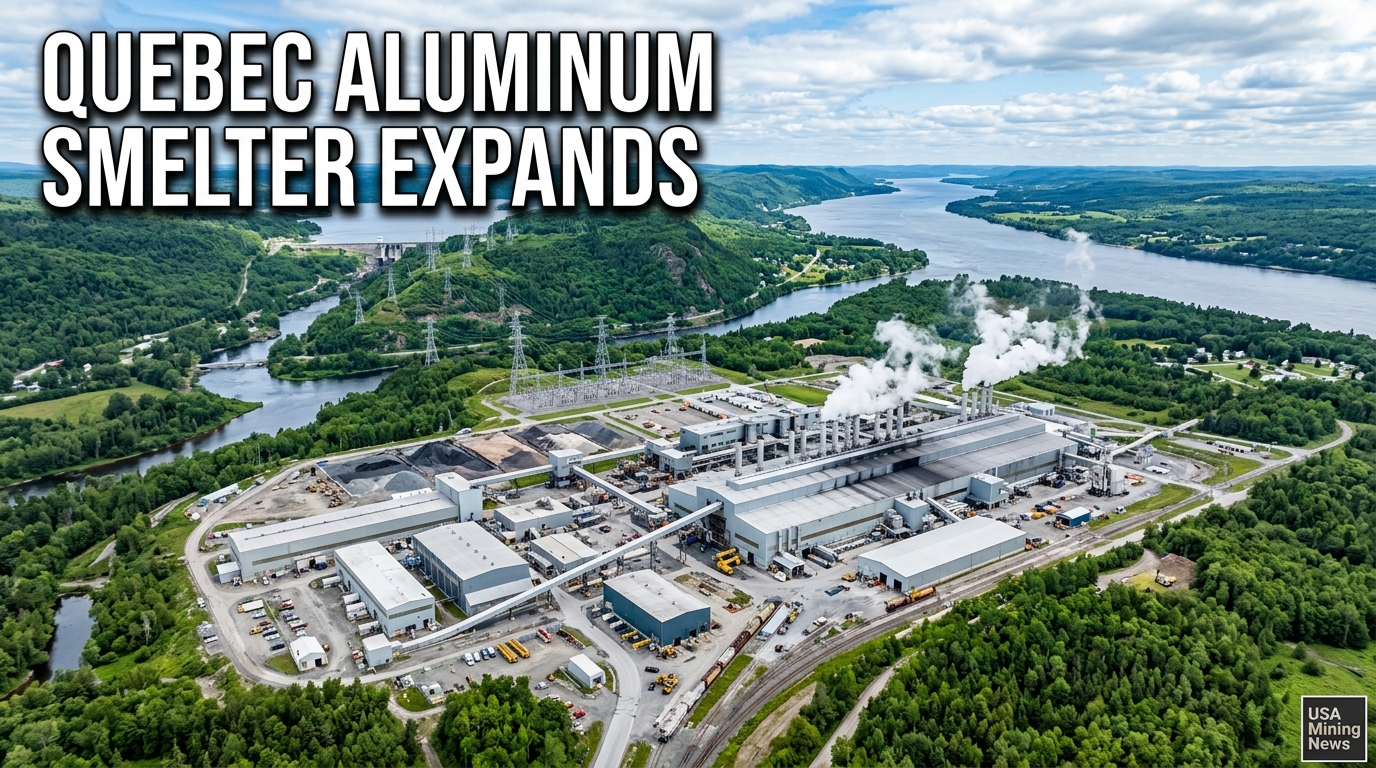
SAGUENAY, QUEBEC – Mining giant Rio Tinto (NYSE, LSE, ASX: RIO) announced on May 29, 2026, the official commencement of a substantial $1.5 billion expansion project at its AP60 low-carbon aluminum smelter in Quebec, Canada. This significant investment is poised to dramatically enhance the facility's production capabilities and reinforce Rio Tinto's strategic focus on meeting burgeoning global demand for lower-emission aluminum across the automotive, construction, and packaging sectors.
The expansion, which received initial approval in 2023 and up to $113 million in financial support from the Quebec government, represents a pivotal step in decarbonizing the aluminum industry. It not only amplifies output of an already industry-leading technology but also signals a broader shift within Rio Tinto's aluminum portfolio towards more environmentally sustainable operations, capitalizing on Quebec’s abundant hydroelectric power resources.
Tripling Production Capacity with AP60 Technology
The core of this expansion involves the addition of 96 new AP60 pots at the Arvida operation. This substantial addition is projected to more than triple the annual primary aluminum production capacity of the AP60 unit. Rio Tinto confirmed that once fully ramped up, a milestone expected by December 31, the expanded AP60 smelter is anticipated to produce approximately 220,000 tonnes of aluminum annually. This represents a significant 160,000-tonne increase from its previous capacity, underscoring the scale of this modernization effort.
The AP60 technology itself is a cornerstone of Rio Tinto's low-carbon strategy. It stands as one of the lowest-carbon aluminum smelting technologies operating at a commercial scale globally. Powered entirely by hydroelectricity, the process dramatically reduces environmental impact, producing approximately one-seventh of the greenhouse gas emissions associated with the global industry average for aluminum production. This stark difference provides a critical competitive advantage in a market increasingly driven by environmental, social, and governance (ESG) considerations.
Jérôme Pécresse, Rio Tinto’s Aluminium and Lithium CEO, highlighted the strategic implications of this project in a recent statement, noting, “The newly expanded AP60 smelter reinforces our competitiveness and the offer for our customers position in North America increases the efficiency of our Quebec operations and reduces our carbon emissions by approximately 290,000 tonnes per year compared to the old Arvida smelter.” This reduction in carbon emissions is a tangible metric demonstrating the tangible environmental benefits of transitioning to advanced, hydro-powered smelting technologies.
Phased Transition and the Legacy of Arvida
The expansion of the AP60 smelter is intricately linked with a broader operational optimization strategy at Rio Tinto's Arvida complex. The new AP60 capacity is specifically intended to offset the gradual closure of older, less efficient potlines at the historical Arvida smelter. This phased transition is an industry-standard approach to modernizing facilities while maintaining operational continuity. The complete closure of these older potlines is expected to conclude next month, marking the end of an era for some of the original infrastructure at Arvida.
The Arvida complex holds a storied history within the global aluminum industry. Constructed in the 1920s by Alcan, decades before its acquisition by Rio Tinto, the original smelter was instrumental in establishing the Saguenay region of Quebec as one of the world’s foremost aluminum production hubs. This status was primarily due to the region's vast and readily available hydroelectric power, a natural advantage that continues to define Quebec's position in the low-carbon aluminum market today.
The AP60 pilot plant, which began its operations in 2013, has served as a critical showcase for Rio Tinto’s commitment to next-generation smelting technologies. Its successful long-term operation provided the foundational data and confidence necessary to undertake this significant commercial expansion, demonstrating the viability and efficiency of the AP60 process at scale.
Beyond primary aluminum production, Rio Tinto is also pursuing complementary initiatives at Arvida. The company is actively developing a nearby recycling facility, with the explicit goal of integrating post-consumer aluminum into its product streams. This move aligns with circular economy principles and will further reduce the overall carbon footprint of its aluminum products, appealing to manufacturers seeking to enhance their supply chain sustainability.
Quebec's Enduring Role in Sustainable Aluminum Production
Quebec continues to cement its reputation as a leading global producer of low-carbon aluminum, a distinction largely attributable to its reliance on renewable hydroelectricity for nearly all its smelters. This unparalleled access to green energy provides a significant competitive edge, allowing the province to supply high-quality, lower-emissions metal to a diverse array of North American industries.
Key sectors benefiting from Quebec’s low-carbon aluminum include:
- Automotive Manufacturers: Companies seeking to reduce the embodied carbon in their vehicles, aligning with increasingly stringent emissions regulations and consumer preferences for sustainable products.
- Beverage Can Producers: A high-volume market where lightweight and infinitely recyclable aluminum is dominant, with a growing emphasis on minimizing the environmental impact of production.
- Aerospace Companies: Requiring high-strength, lightweight materials, the aerospace sector is also increasingly looking for sustainable sourcing options to meet its own decarbonization targets.
Rio Tinto's efforts in Quebec extend beyond the AP60 expansion. The company is actively engaged in other partnerships to advance low-carbon aluminum production. An example is its collaboration with Prysmian, where Rio Tinto produces low-carbon aluminum rod, further demonstrating its diversified approach to sustainable material supply.
Innovation Beyond AP60: The Elysis Initiative
While the AP60 expansion represents a significant commercial milestone, Rio Tinto is also at the forefront of developing even more transformative technologies for the future of aluminum production. The company is a key player in Elysis, a groundbreaking initiative focused on developing a carbon-free aluminum smelting technology. This revolutionary process aims to eliminate direct greenhouse gas emissions from the smelting process entirely, producing oxygen as its primary byproduct.
Elysis is being developed with substantial support from both the Canadian federal government (Ottawa) and the Quebec provincial government. A demonstration plant for this cutting-edge technology is currently under construction within the province, signaling a long-term commitment to positioning Quebec as a global hub for metallurgical innovation. The success of Elysis could fundamentally redefine aluminum production, moving beyond merely low-carbon to truly carbon-free processes.
Economic and Environmental Impact
The $1.5 billion investment in the Arvida AP60 expansion carries significant economic and environmental implications. Economically, the project secured up to $113 million in financial support from the Quebec government, highlighting the strategic importance of this industry to the province. During its construction phase, the project generated more than 1,500 jobs at peak activity, providing substantial employment opportunities in the Saguenay region. Once operational, the expanded smelter will support approximately 100 permanent employees, contributing to long-term economic stability in the area.
From an environmental perspective, the projected reduction of approximately 290,000 tonnes of carbon emissions per year, compared to the older Arvida smelter, is a substantial contribution to climate change mitigation. This aligns with global targets for industrial decarbonization and positions Rio Tinto as a leader in sustainable mining and metals production. Such investments are critical for industries that are inherently energy-intensive to pivot towards a lower-carbon future.
In contrast to challenges faced elsewhere, such as Century Aluminum’s proposed smelter in Oklahoma which remains dependent on securing a long-term electricity agreement for its viability, Quebec's established and ample hydroelectric capacity provides a stable and predictable advantage. This underscores the strategic importance of reliable, clean power in the future landscape of metals production, giving Quebec aluminum producers a significant competitive edge.
Future Outlook and Market Positioning
The expansion of the AP60 smelter positions Rio Tinto strongly within the evolving global aluminum market. As industries worldwide increasingly prioritize sustainable sourcing and supply chain transparency, the demand for certified low-carbon aluminum is projected to grow significantly. Rio Tinto's proactive investment ensures it is well-equipped to meet this demand, offering a premium product with a demonstrable environmental advantage.
This project is not merely an incremental increase in capacity; it is a strategic reinforcement of Rio Tinto’s commitment to innovation and sustainability in its aluminum division. By leveraging advanced technology and Quebec's unique energy profile, the company is not only enhancing its operational efficiency and reducing its environmental footprint but also solidifying its leadership in the transition to a greener, more responsible mining industry.
The successful ramp-up of this expansion by the end of the year will establish a new benchmark for sustainable aluminum production, influencing commodity markets and potentially spurring further investment in similar low-carbon technologies across the globe. For investors and industry professionals, this represents a clear signal of where the future of aluminum lies: in highly efficient, environmentally responsible operations powered by renewable energy. The Saguenay region of Quebec, with Rio Tinto at the forefront, continues to play a pivotal role in shaping that future.