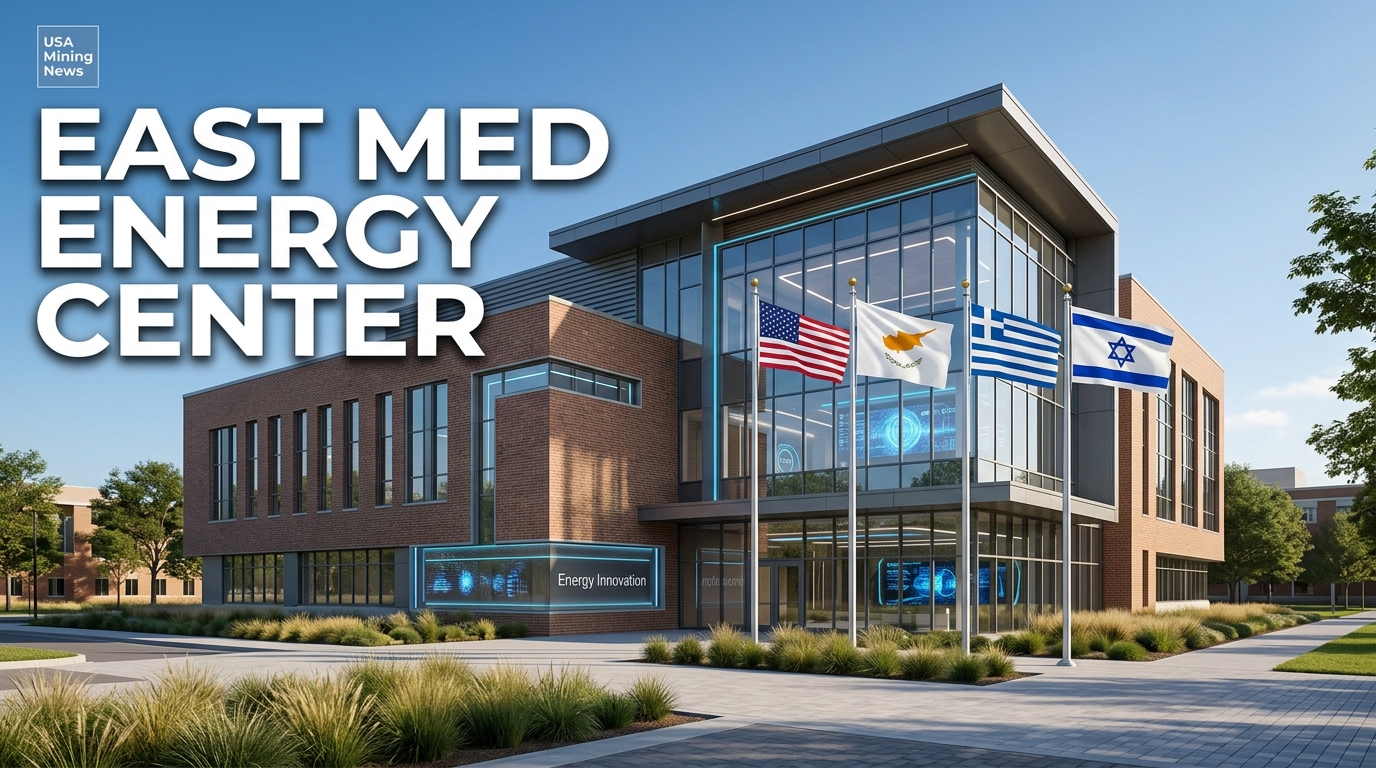
HOUSTON, TEXAS – June 11, 2026, marked a significant milestone for international energy cooperation and regional stability with the formal agreement to establish the Eastern Mediterranean Energy Center (EMEC) in Houston. This groundbreaking initiative, formalized through a Declaration of Intent (DOI) signed by key representatives from the United States, Cyprus, Greece, Israel, and Rice University, is set to become a vital hub for advancing energy security and fostering innovation in the strategically important Eastern Mediterranean region.
The signing ceremony saw U.S. Secretary of Energy Chris Wright append his signature alongside Michael Damianos, the Minister of Energy, Commerce, and Industry of the Republic of Cyprus; Stavros Papastavrou, the Minister of Environment and Energy for Greece; Dr. Yechiel Leiter, the Israeli Ambassador to the United States; and Reginald DesRoches, the President of Rice University. This diverse assembly of signatories underscores the multifaceted nature of the partnership, binding governmental energy policy, diplomatic relations, and academic expertise together in a unified framework.
The EMEC agreement serves a dual purpose: it strengthens America's partnerships with key allies in the Eastern Mediterranean and simultaneously expands opportunities for U.S. energy development, innovation, and investment globally. Secretary Wright, in his remarks, emphasized that the EMEC is a direct advancement of a key initiative envisioned under Secretary Rubio's Eastern Mediterranean Security and Energy Partnership Act of 2019, reflecting a bipartisan and sustained strategic interest in the region.
Strategic Imperatives: Bolstering Energy Security in a Critical Region
As global energy demand continues its inexorable rise, the importance of diversified, secure, and sustainable energy supplies has never been more pronounced. The establishment of EMEC is a direct response to this imperative. The United States, Cyprus, Greece, and Israel will collaborate intently on several critical fronts to address these challenges and capitalize on the region's burgeoning energy potential. These include:
- Promoting Energy Security: Ensuring reliable and stable access to energy resources for all partners and allies in the broader European market.
- Strengthening Critical Infrastructure: Enhancing the resilience and security of pipelines, terminals, and power grids against both physical and cyber threats.
- Supporting Emerging Technologies: Investing in research and development for new energy solutions, from advanced hydrocarbon extraction to renewable integration and carbon capture.
- Advancing Long-Term Economic Growth: Creating jobs, fostering local industries, and attracting international investment through robust energy sector development.
U.S. Secretary of Energy Chris Wright articulated the broader vision, stating, "The Eastern Mediterranean Energy Center will help fulfill President Trump's vision of prosperity and energy security at home and abroad." He further elaborated on the region’s increasing importance, noting, "The Eastern Mediterranean is an increasingly important region for global energy development, and this agreement strengthens cooperation among key allies while advancing our shared goals of energy abundance, economic prosperity, and regional stability." This sentiment highlights not only the economic but also the significant geopolitical dimensions of energy cooperation in a region often characterized by complex dynamics.
Houston as the Nexus: Leveraging Expertise in Hydrocarbon Development
The decision to establish EMEC at Rice University in Houston is a deeply strategic one, directly leveraging the city’s unparalleled position as a global energy capital. Houston is home to thousands of energy companies, from supermajors to innovative startups, alongside a rich ecosystem of engineering firms, service providers, and research institutions. This concentration of expertise in hydrocarbon development, particularly in offshore exploration and production, makes it an ideal location for the EMEC.
Secretary Wright underscored this choice, affirming, "By establishing the Eastern Mediterranean Energy Center at Rice University in Houston, we are ensuring all member nations of this agreement will benefit from a lasting partnership bound together by the brightest minds and industry leaders in hydrocarbon development." Rice University, a leading research institution, offers significant academic firepower in engineering, materials science, and computational methods, all critical to advancing energy technologies. This academic-industrial synergy in Houston provides EMEC with access to cutting-edge research, a highly skilled workforce, and a direct link to global energy markets and innovative practices.
Pillars of Collaboration: Joint Initiatives and Technical Exchanges
The agreement outlines a robust framework for collaboration on shared priorities that are central to the energy future of the Eastern Mediterranean. These priorities are comprehensive, covering the entire energy value chain:
- Natural Gas Development: A primary focus given the significant offshore gas discoveries in the Eastern Mediterranean, such as Israel's Leviathan and Tamar fields, Cyprus's Aphrodite and Calypso prospects, and Egypt's supergiant Zohr field. This area of collaboration will likely involve sharing best practices in exploration, drilling, production, and reservoir management, as well as optimizing economic viability for new projects.
- U.S. LNG Infrastructure: With the United States now the world's largest LNG exporter and poised for substantial growth in export capacity, collaboration will likely involve sharing expertise in liquefaction, terminal development, and shipping logistics. This also opens pathways for potential U.S. LNG supplies to complement Eastern Mediterranean production or serve as swing supply, enhancing market stability.
- Energy Transportation Networks: The development of infrastructure like pipelines (e.g., the proposed EastMed pipeline), shipping routes, and interconnectors is crucial for bringing Eastern Mediterranean gas to regional and European markets. EMEC will facilitate discussions on technical standards, economic feasibility, and security for these critical arteries.
- Grid Reliability and Critical Infrastructure Resilience: As energy systems become more interconnected and complex, ensuring grid stability and protecting energy infrastructure from natural disasters, accidents, and cyber-attacks is paramount. This collaboration will focus on sharing technological solutions and operational strategies for robust energy systems.
- Emerging Technologies: Beyond traditional hydrocarbons, EMEC will delve into a broader spectrum of innovations, potentially including advanced energy storage solutions, renewable energy integration into existing grids, carbon capture, utilization, and storage (CCUS) technologies, and digital transformation in energy operations.
Beyond project-specific collaboration, the EMEC framework also establishes mechanisms for intellectual and human capital development. This includes facilitating scientific and technical exchanges between experts, forging research partnerships between universities and industry, developing workforce training initiatives to meet the evolving demands of the energy sector, and fostering continuous engagement with industry stakeholders to ensure relevance and applicability of EMEC's work.
The Eastern Mediterranean: A Region of Emerging Energy Significance
The Eastern Mediterranean has rapidly evolved into a pivotal region for global energy development over the past two decades, largely due to successive large-scale natural gas discoveries. These finds not only promise to meet domestic energy needs for Israel, Cyprus, and Greece but also offer significant export potential to energy-hungry Europe, providing a valuable diversification of supply from traditional sources. However, the development of these resources faces complex technical, economic, and geopolitical challenges, including deepwater drilling, high development costs, and navigating regional political sensitivities. The EMEC is designed to provide a neutral and collaborative platform to address these challenges, fostering a shared regional interest in secure, efficient, and cooperative energy development. This initiative complements existing regional groupings like the East Mediterranean Gas Forum (EMGF) by adding a strong U.S. dimension of technical expertise, investment, and strategic alignment.
U.S. Leadership in Global Energy Markets: Context for the Agreement
The EMEC agreement is also set against the backdrop of significant shifts in global energy dynamics, propelled by strong U.S. energy production. The source material highlights the strategic context: "Today, the United States is the largest producer of oil and natural gas as well as the world’s largest LNG exporter." This position of energy preeminence allows the U.S. to play a critical role in global energy security. Furthermore, with U.S. LNG exports "poised to more than double in the coming years," the U.S. capacity to deliver energy abundance and stability abroad is substantially increasing. This expanded export capability offers partners in the Eastern Mediterranean greater optionality and reinforces the strategic importance of cooperation with the U.S. in developing their own resources and infrastructure.
Implications for the Mining Industry
While the Eastern Mediterranean Energy Center primarily focuses on hydrocarbon development and energy technologies, its establishment carries significant, albeit indirect, implications for the global mining industry. The core activities proposed under EMEC—natural gas development, infrastructure expansion, and emerging technologies—are inherently dependent on a robust supply chain for various raw materials and processed minerals. For instance:
- Natural Gas Development and Infrastructure: The exploration, drilling, and production of natural gas, especially in deepwater environments, require vast quantities of steel for platforms, pipelines, and drilling casings. Copper is essential for electrical systems, while specialized alloys are needed for corrosion resistance in harsh marine environments. Aggregates are used in onshore processing facilities, and a range of industrial minerals contributes to drilling fluids and cementing operations.
- Energy Transportation Networks: The construction of new pipelines, whether for regional or international transit, necessitates substantial steel and specialized coatings. Electrical grid upgrades and interconnections, crucial for enhancing reliability, demand considerable volumes of copper for transmission lines and substations, as well as aluminum for conductors.
- Emerging Technologies: Investment in new energy solutions, such as battery storage (reliant on lithium, cobalt, nickel, manganese, graphite), advanced materials for solar panels (silicon, silver), and components for wind turbines (rare earth elements, copper, steel), directly translates into increased demand for critical minerals. Even innovations in carbon capture and storage infrastructure will require specific raw materials for construction and potential sorbents.
- Economic Growth: The overall economic prosperity stimulated by a flourishing energy sector in the Eastern Mediterranean will also drive demand for a wide array of raw materials for tangential industries, construction, and urban development.
Therefore, mining companies involved in the extraction and processing of base metals, industrial minerals, steel-making ingredients, and critical minerals will find new opportunities arising from the long-term energy strategic goals of the EMEC. The center's focus on resilience and advanced infrastructure will invariably lead to demand for higher-quality, durable, and technologically advanced materials.
Future Outlook: A Catalyst for Regional Development and Global Partnerships
The establishment of the Eastern Mediterranean Energy Center is more than just a declaration; it is a long-term commitment to fostering a resilient, diversified, and secure energy landscape in a region of significant global importance. In the immediate future, the EMEC will likely focus on programmatic development, establishing research priorities, coordinating scientific exchanges, and facilitating initial industry engagement forums. The presence of Rice University as the host will be instrumental in convening academic, government, and industry leaders to tackle complex technical and policy challenges.
Over the coming years, the EMEC is expected to act as a significant catalyst for new energy projects, attracting investment, and fostering technological advancements that will benefit all member nations and potentially the broader European market. It represents a concrete step towards realizing a vision of energy abundance, economic prosperity, and regional stability that extends far beyond the immediate signatories, demonstrating the enduring power of cooperative international relations in addressing pressing global energy challenges.